A PCBA is a printed circuit board assembly: the bare board (the PCB) with its parts soldered on. Ordering one looks like a single purchase, but it is two manufacturing jobs and one purchasing job that must finish at the same moment. This article walks through them in order, so you know what to prepare and where a delay can start.
The three jobs behind one order
- Fabrication. The factory makes the bare board from your Gerber and drill files.
- Parts. Every component on your bill of materials (BOM) must be bought, or supplied by you, and be on the shelf before assembly starts.
- Assembly. Parts are soldered to the board, the result is inspected and tested, packed and shipped.
Fabrication and parts run in parallel. Assembly cannot begin until both are done, so the slower of the two sets the schedule.
The drawing puts the three jobs on one time line. The bars are not to scale: how long each one takes depends on the board, the parts and the season.
- Fabrication is done first in this picture. The bare boards are ready and wait.
- Parts are the longer job here. The amber outline follows the chain that sets the date: parts, then assembly and test, then shipping.
- Assembly and test start only when fabrication and parts are both done.
- Shipping starts when assembly and test are done.
- The dashed line is waiting time: the boards are finished and cannot move on. A faster fabrication does not shorten it.
Step 1. Prepare the files
You need, at minimum:
- Gerber and drill files for the bare board (one file per copper, mask and legend layer, plus the drill data and the board outline).
- A BOM that lists every part with a manufacturer part number.
- A placement file (also called pick-and-place or centroid file) with the position, rotation and side of every part.
Mistakes found here cost almost nothing to fix. The same mistake found after the boards are made costs the boards. Two articles go deeper: Files for fabrication and assembly and Writing a BOM a factory can buy.
Step 2. Check the files
A file check looks for what a person reviewing the files would look for: a missing layer, an open outline, a hole that does not land on its pad, copper closer than the process can make. It is much faster than waiting for an engineer to read your email. It can show that files are complete and consistent. It cannot show that your circuit works, and no file check can.
Step 3. Choose options and get a price
You choose layer count, board thickness, copper weight, surface finish, solder mask colour and quantity. For assembly you also choose which sides carry parts and how the parts are supplied. The price follows these choices, which is why it helps to know what moves it. See What drives the price of a PCBA.
Step 4. Engineering review
A factory engineer reads the order before anything is bought or made. They look for things the files do not state outright: a part with no stock, a footprint that does not match the part's datasheet, a pad design that will tilt a small component, a polarity mark that is missing from the legend. Expect questions here. Answering them quickly is the cheapest schedule saving you have.
Step 5. Fabrication
The bare boards are made, tested electrically and inspected. How a PCB is made lists the steps and what can go wrong at each.
Step 6. Parts
The factory buys the parts on your BOM, or you send parts yourself (consigned parts). Parts that are rare, on allocation or past end of life are the usual cause of late orders. A part also needs to be bought in more than the exact count: reels have minimum quantities, and machines lose a few parts while loading. See Lead times and how to plan them.
Step 7. Assembly
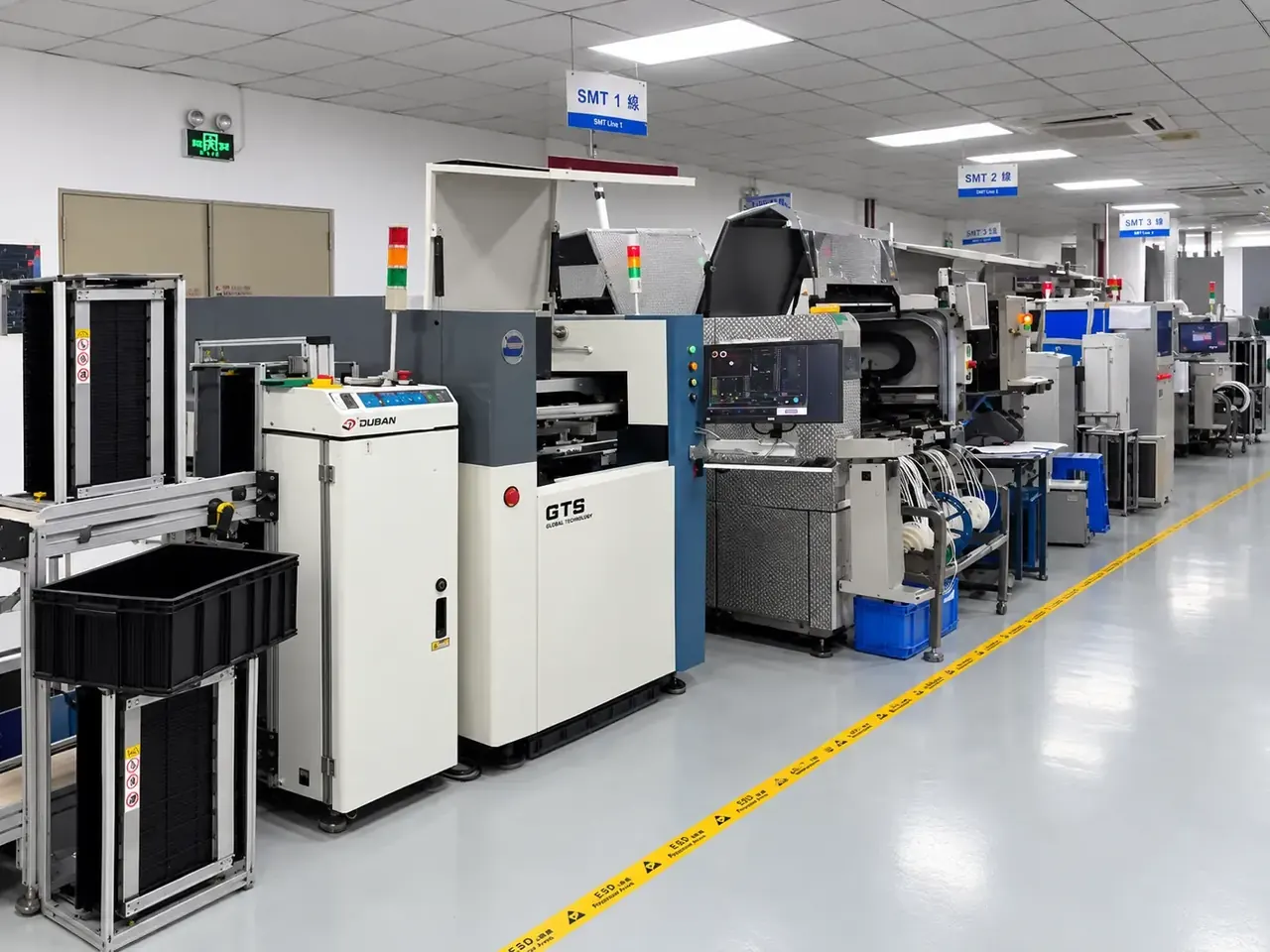
Solder paste is printed on the pads through a stencil, the placement machine puts the parts on, the board passes through a reflow oven that melts the paste, and any through-hole parts are soldered afterwards. How boards are assembled describes each step.
Step 8. Inspection and test
Inspection finds soldering and placement faults. Test finds whether the board does what it should. They are different things, and which of them you get depends on what you order and what you supply: a test procedure, a programming file, a fixture. See Inspection and test.
Step 9. Packing and shipping
Boards are packed against moisture and static, and shipped. For orders from China, the box usually crosses a border, and someone pays import duty and tax. Decide before you order who that is. See Shipping and importing boards.
Who does what
| Step | You | The factory |
|---|---|---|
| Files | Export them, name layers clearly | Check that they can be built |
| BOM | Give exact part numbers, mark alternates | Source parts, flag stock and life-cycle problems |
| Options | Choose, and say what matters (impedance, finish) | Say what is possible |
| Review | Answer questions | Raise them |
| Build | Nothing | Fabricate, assemble, inspect |
| Test | Supply a procedure or fixture if you want function tested | Run it |
| Receive | Pay duty and tax, if you are the importer | Ship |
Where time and money go
Time goes mostly to waiting: for parts, for answers to engineering questions, for shipping. Money goes to the number of boards and parts, the set-up work that is the same for one board or for fifty (stencil, machine programming, test set-up), and the choices that make the bare board harder to make, such as more layers or tighter features.
The cheapest orders are the ones with clean files, a BOM in which every line can be bought, and no surprises for the engineer.
How this shows up when you order here
On Ulike Technology you upload your files at the upload page. The 25 checks run at upload, before you pay, and show what they found and which checks could not run. The price follows the options you choose and is shown in US dollars. An engineer confirms every order before production starts. Boards ship by DHL Express from Shenzhen, and the receiver pays duty and tax. The options and limits in force are listed on the capabilities page. What the check covers is on the file check page.